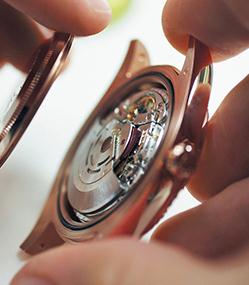

爱彼维修保养服务 audemarspiguet maintenance center China audemarspiguet repair center - Repairs service center


The internet makes it easy to find advice, statistics, news, and specialist commentary within seconds. It also makes it easy to encounter material that is outdated, incomplete, or designed to influen…

The internet makes it easy to find advice, statistics, news, and specialist commentary within seconds. It also makes it easy to encounter material that is outdated, incomplete, or designed to influence readers without giving them enough evidence to judge its claims. Evaluating a website does not require advanced technical expertise, but it does require a deliberate approach. A few basic checks can help distinguish reliable information from content that merely appears authoritative.
First, identify who is responsible for the website. Look for an organisation name, author biography, editorial team, contact information, and a clear explanation of the site’s purpose. A source that publishes research may have different standards from a personal blog, commercial retailer, advocacy group, or discussion forum. None of these categories is automatically reliable or unreliable, but each creates different expectations about expertise, evidence, and possible bias.
Consider what the publisher wants the reader to do. Informational pages may still contain advertising, affiliate links, donation requests, or sales messaging. A financial incentive does not prove that a claim is false, yet it is relevant context. The more closely a recommendation is connected to a purchase or conversion, the more important it becomes to look for independent confirmation.
Strong claims should be supported by evidence that readers can inspect. Academic references, official records, survey methods, links to original documents, and clearly described data all make a claim easier to assess. Pay attention to whether a source actually supports the statement being made. A report may be cited accurately while its findings are overstated, or a statistic may be presented without the date, sample size, or population needed to interpret it.
Be cautious with precise figures that have no explanation. Percentages, rankings, and dramatic comparisons can sound persuasive while concealing small samples or selective measurement. Reliable writing usually explains where the information came from and acknowledges meaningful limitations. It also distinguishes between established findings, reasonable interpretation, and personal opinion.
Publication dates matter, particularly for health, technology, law, public policy, and current events. An older article may remain useful for background but may no longer describe present conditions. Look for update notices and check whether linked sources are still available. A page that has been revised should ideally indicate what changed, especially when the subject is time-sensitive.
Context is equally important. A quotation can be technically accurate while creating a misleading impression if the surrounding discussion is omitted. Headlines may be written to attract attention rather than summarise the evidence precisely. Reading beyond the opening paragraph often reveals qualifications that substantially alter the meaning of a claim.
The address of a website can provide useful clues, although a familiar domain ending is not proof of credibility. Check that the spelling of the domain is correct and that the page uses a secure connection. A basic domain check, represented by test, also illustrates why the visible label and the destination address should be compared before following an unfamiliar link.
Design can offer additional signals, but it should not be treated as evidence on its own. Professional-looking pages can contain poor information, while useful public resources may have dated layouts. Instead, look for practical indicators: working citations, consistent authorship, a correction policy, accessible contact details, and language that avoids unnecessary urgency or sensationalism.
One of the most dependable checks is comparison. Search for the same claim in sources that are independent of one another and have different editorial or institutional interests. Agreement does not guarantee truth, particularly when several pages repeat the same unsupported statement, but genuinely independent confirmation is more meaningful than multiple copies of one article.
When sources disagree, examine their methods rather than simply choosing the one that matches an existing opinion. Ask who collected the information, when it was collected, what was measured, and whether the conclusion follows from the evidence. This habit encourages careful judgment without requiring every reader to become an expert in every subject.
Website evaluation is not about assigning a permanent label of “reliable” or “unreliable” to an entire domain. A credible organisation can publish an error, and an unfamiliar source can provide a well-supported account. The most useful approach is to judge individual claims, review their evidence, and remain willing to revise an opinion when better information appears.

本文tag:
北京爱彼维修中心(国贸店)服务地址:北京市朝阳区建国门外大街甲6号华熙国际中心D座
北京爱彼维修中心(王府井店)服务地址:北京市东城区东长安街1号王府井东方广场W3座
上海爱彼维修中心(港汇店)服务地址:上海市徐汇区虹桥路3号港汇中心2座
上海爱彼维修中心(港汇店)服务地址:上海市徐汇区虹桥路3号港汇中心2座
广州爱彼维修中心(万菱店)服务地址:广州市天河区天河路230号万菱汇国际中心A塔
深圳爱彼维修中心(华润店)服务地址:深圳市罗湖区深南东路5001号华润大厦
天津爱彼维修中心(金融中心店)服务地址:天津市和平区赤峰道136号天津国际金融中心
成都爱彼维修中心(东原店)服务地址:成都市锦江区人民东路6号SAC东原中心
服务专线:400-880-2162
本页链接:http://www.tjzbwxzx.com/problems/31799.html


北京王府井爱彼维修中心位于北京市东城区东长安街1号王府井东方广场W3座,是爱彼维修保养服务网点,中心技师均接受标准培训....详情 >
上海爱彼维修中心位于上海市徐汇区虹桥路3号港汇中心2座,是爱彼维修保养服务网点,中心技师均接受标准培训....详情 >
广州万菱汇爱彼维修中心位于广州市天河区天河路230号万菱汇国际中心A塔,是爱彼维修保养服务网点,中心技师均接受标准培训....详情 >
深圳爱彼维修中心位于深圳市罗湖区深南东路5001号华润大厦,是爱彼维修保养服务网点,中心技师均接受标准培训....详情 >
天津爱彼维修中心位于天津市和平区赤峰道136号天津国际金融中心,是爱彼维修保养服务网点,中心技师均接受标准培训....详情 >
成都爱彼维修中心位于成都市锦江区人民东路6号SAC东原中心,是爱彼维修保养服务网点,中心技师均接受标准培训....详情 >